 Worldwide
 France
 Germany
 United Kingdom
 Italy
Italy
 United States
 Spain
Spain
 Poland
 Romania
 Croatia
 Australia
 Austria
 Belgium
 Brazil
 Bulgaria
 Czech Republic
 Denmark
 Finland
 Greece
 Hungary
 India
India
 Japan
Japan
 Lithuania
 Netherlands
 New Zealand
 Norway
 Serbia
 Slovakia
 Slovenia
 South Africa
 Sweden
 United Arab Emirates
Chapters
- The risk you don’t see in transport and logistics – and what it could cost you
- Different views lead to different conclusions
- When decisions slow down, options shrink
- Where transport and logistics companies feel this most
- What changes when teams share one up-to-date view
- See what earlier visibility looks like in practice
The risk you don’t see in transport and logistics – and what it could cost you
In transport and logistics, the most serious risks rarely announce themselves. They build slowly, with small changes that don’t seem urgent on their own. A customer misses a payment deadline. A subcontractor renegotiates rates. A route becomes less reliable and starts affecting service levels.
Fuel surcharge disputes, rate renegotiations and customs holds can quickly turn ‘small’ issues into working-capital pressure.
The problem isn’t that teams are ignoring or missing these warning signs. It’s that they’re only seeing one part of the picture. In practice, this shows up as slower credit decisions, longer supplier onboarding, inconsistent compliance checks and less time to act before disruption hits margins.
Different views lead to different conclusions
Risk doesn’t mean the same thing to every team. Credit teams focus on payment behaviour and financial health. Procurement looks at whether suppliers can deliver. Compliance teams track sanctions, watchlists and integrity issues.
Those priorities are different by design – but without a shared view, they can lead teams to reach different conclusions about the same customer or supplier at the same time. A customer might look acceptable based on their payment history, while other signals raise a completely different question about whether the business can work with them at all.
Why teams see different risks
In practice, risk shows up in different ways depending on who’s looking at it. Each team pays attention to the signals that matter most for their role – and while that’s sensible in isolation, it’s risky when those views never come together.
- Credit and finance: late payments, changing payment patterns, growing exposure concentration and terms tightened too late.
- Procurement and operations: subcontractor fragility, capacity constraints, performance drop-offs and continuity risk.
- Compliance: sanctions, watchlist and adverse-information checks that happen late or vary by country and entity.
None of these views are wrong. The problem starts when they stay separate – and decisions slow down as teams try to reconcile them under pressure.
When decisions slow down, options shrink
When teams work in isolation, decisions take longer. People pause to compare views, redo checks or wait for confirmation from elsewhere in the business. Instead of acting decisively on early signals, they waste time checking information lines up.
That delay matters. Not because nothing happens during that time, but because conditions don’t wait. While teams are weighing up what to do next, routes become unavailable, services drop off the schedule or disruption spreads to another route. By the time they’re all ready to act, the situation they’re deciding on can look very different.
Where transport and logistics companies feel this most
Transport and logistics networks almost never sit neatly in one market or legal entity either. Customers, suppliers and subcontractors operate across several routes, regions and business units at once. That’s reflected in the way risk builds too – a change that seems manageable in one place can be far more serious elsewhere.
Fragmented and outdated risk information makes early action harder – not because teams lack data, but because they miss the window to use it well. Bringing it all together gives them a clear starting point and more time to respond well before risk becomes unmanageable.
What changes when teams share one up-to-date view
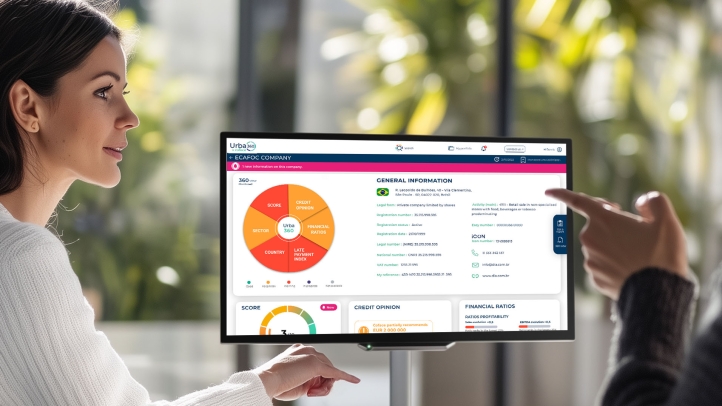
When credit, supplier and compliance signals sit in one place – and teams can monitor them continuously – they spend less time reconciling information and more time acting early. That means more consistent decisions across countries and legal entities, earlier intervention on deteriorating partners and fewer last-minute workarounds.
See what earlier visibility looks like in practice
Our whitepaper, Risk visibility and decision-making in transport and logistics, explores how transport and logistics organisations can bring credit, supplier and compliance insight together to act earlier – and make faster, more consistent decisions across their networks.
If you’re protecting a business from risk and making tough calls early, our paper will show you what changes when decisions are backed by one clear, up-to-date global view.